

Few things are more frustrating than stepping on the scale after weeks of dieting and exercise only to see no change. Many people ask, “Why am I not losing weight when I exercise and diet?” The answer is rarely simple. A weight loss plateau can stem from diet mistakes, hormonal issues, lifestyle stress, or unrealistic expectations. This article explains the most common reasons weight loss stalls and practical ways to fix them.
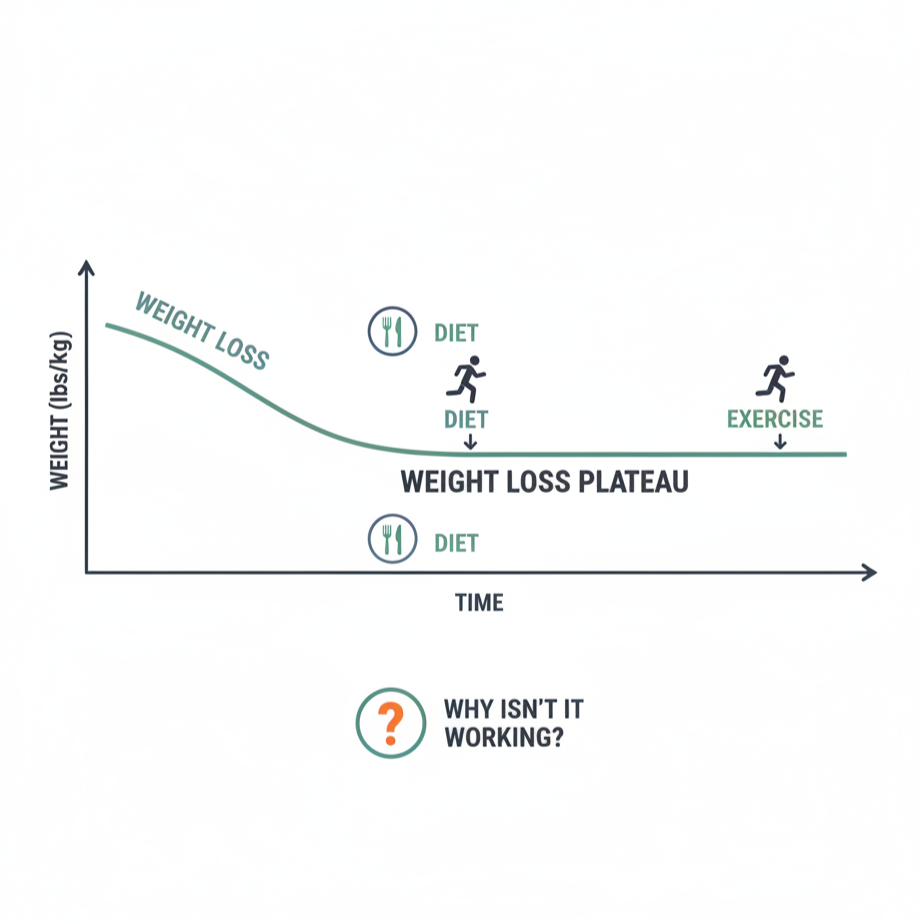
Table of Contents
The Reality of Weight Loss Plateaus
Understanding Weight Loss Plateau
A weight loss plateau occurs when fat loss slows or stalls despite consistent diet and exercise. It’s not failure—it’s your body adapting to new energy demands. Plateaus are normal, and almost everyone experiences them during a fat loss journey.
Reasons Weight Loss Stalls
Why do plateaus happen? Common reasons include:
- Your body retains water.
- Glycogen (stored carbs) fluctuates with diet.
- Metabolism adapts, burning fewer calories.
The real solution is maintaining a consistent Sustainable Calorie Deficit, not drastic changes.
Diet and Nutrition Mistakes
Not Losing Fat on Diet – Common Errors
Many believe they’re “eating healthy” but still not losing fat. Common mistakes:
- Miscounting calories or forgetting snacks.
- Drinking liquid calories (juices, lattes, alcohol).
- Overeating high-calorie “healthy” foods like nuts or avocados.
Why Am I Not Losing Weight Even in a Calorie Deficit?
Sometimes, even when tracking, weight loss stalls. Reasons include:
- Metabolic adaptation: the body burns fewer calories as weight drops.
- Stress and sleep issues: poor recovery raises cortisol, promoting fat storage.
- Hormonal changes: especially in women, hormones influence fat loss.
Read more in Hormones and Weight Loss.

Exercise Misconceptions
Why Am I Not Losing Weight When I Exercise and Diet?
Exercise is essential, but many overestimate calorie burn. A 30-minute jog might burn 250 calories, but one snack can erase it. Another issue: doing only cardio without resistance training. Muscle helps regulate metabolism, and without it, fat loss slows. Role of Strength Training in Fat Loss explains why.
Combining Cardio and Strength Training for Best Results
The best approach is combining cardio for calorie burn with lifting for muscle retention. This combination preserves lean mass and supports long-term fat loss. See Combining Cardio and Strength Training.
Hormonal and Medical Factors
Medical Reasons for Not Losing Weight
Certain conditions can stall fat loss regardless of diet. These include:
- Thyroid disorders (hypothyroidism reduces metabolism).
- PCOS (affects insulin sensitivity in women).
- Insulin resistance (impacts how the body uses glucose).
If you’ve been consistent but still see no progress, consulting a doctor is smart.
Female Working Out Not Losing Weight
Women often face unique fat loss challenges:
- Hormonal fluctuations across the menstrual cycle affect water retention.
- Menopause slows metabolism.
- Stress hormones (cortisol) often impact belly fat storage more in women.
Misunderstanding Body Changes
Why Am I Gaining Weight When I’m Eating Less and Working Out?
Many panic when the scale goes up after starting a program. The causes are usually harmless:
- Water retention from new training.
- Muscle gain masking fat loss.
- Digestive changes (food volume, sodium intake).
Why Am I Not Losing Belly Fat Even After Exercise and Diet?
Belly fat is stubborn due to hormones and genetics. Crunches alone won’t reduce it. As explained in the Spot Reduction Myth, fat loss happens across the body, not in one area.
Timeframe and Expectations

No Weight Loss After 3 Weeks of Exercise – Is It Normal?
Three weeks is often too soon for dramatic results. Your body may still be adjusting, or fat loss is being masked by water fluctuations. Progress becomes clearer after 6–8 weeks of consistency.
Before and After Transformations Take Time
Real transformations don’t happen in 21 days. Photos of fitness models often represent years of training. True change requires patience. For inspiration, see Before and After Transformations.
Mindset and Habits
Mindset and Habit Building in Weight Loss
Sustainable fat loss isn’t about quick fixes. It’s about habits—consistent eating, structured workouts, and realistic expectations. Without the right mindset, plateaus can feel like failure. Learn more at Mindset and Habit Building.
How to Break a Plateau
Practical strategies include:
- Reassess calorie intake.
- Increase step count or daily activity.
- Improve sleep quality.
- Introduce refeed days or diet breaks.
- Adjust workout intensity.
Long-Term Fat Loss Lifestyle
Why You’re Not Losing Weight Test (Self-Check)
Ask yourself:
- Am I accurately tracking calories?
- Do I get enough sleep?
- Is stress interfering with recovery?
- Am I consistent for at least 6 weeks?
This checklist helps identify hidden issues stalling progress.
Long-Term Fat Loss Lifestyle Over Quick Fixes
Short-term crash diets rarely last. Building a Long-Term Fat Loss Lifestyle ensures sustainable progress. The key is consistency, not perfection.
FAQs
Why am I not losing weight when I exercise and diet?
Because calorie intake may still exceed output, or exercise is overestimated.
Medical reasons for not losing weight?
Thyroid issues, PCOS, and insulin resistance.
Female working out not losing weight?
Hormones, water retention, and menstrual cycles.
Why am I not losing belly fat even after exercise and diet?
Belly fat is hormonally influenced; spot reduction doesn’t work.
Why am I gaining weight when I’m eating less and working out?
Likely water retention, digestive weight, or early muscle gain.
Why am I not losing weight even though I’m in a calorie deficit and working out?
Metabolic adaptation, miscalculated intake, or poor sleep.
No weight loss after 3 weeks of exercise?
Normal—body needs more time.
Why you’re not losing weight test?
Use a checklist of diet, sleep, stress, and consistency factors.
Visit my Instagram account for more