

A sustainable calorie deficit is the foundation of long-term fat loss. Instead of crash diets that promise rapid results, a safe calorie deficit ensures you lose fat without sacrificing health, energy, or muscle. By learning how many calories you need to lose weight, what to eat, and how to structure your daily calorie intake for fat loss, you can create a lifestyle that supports steady progress. In this guide, we’ll cover everything from calorie deficit calculators to meal planning, while tackling common mistakes and myths. The goal is clear: fat loss you can maintain for life.
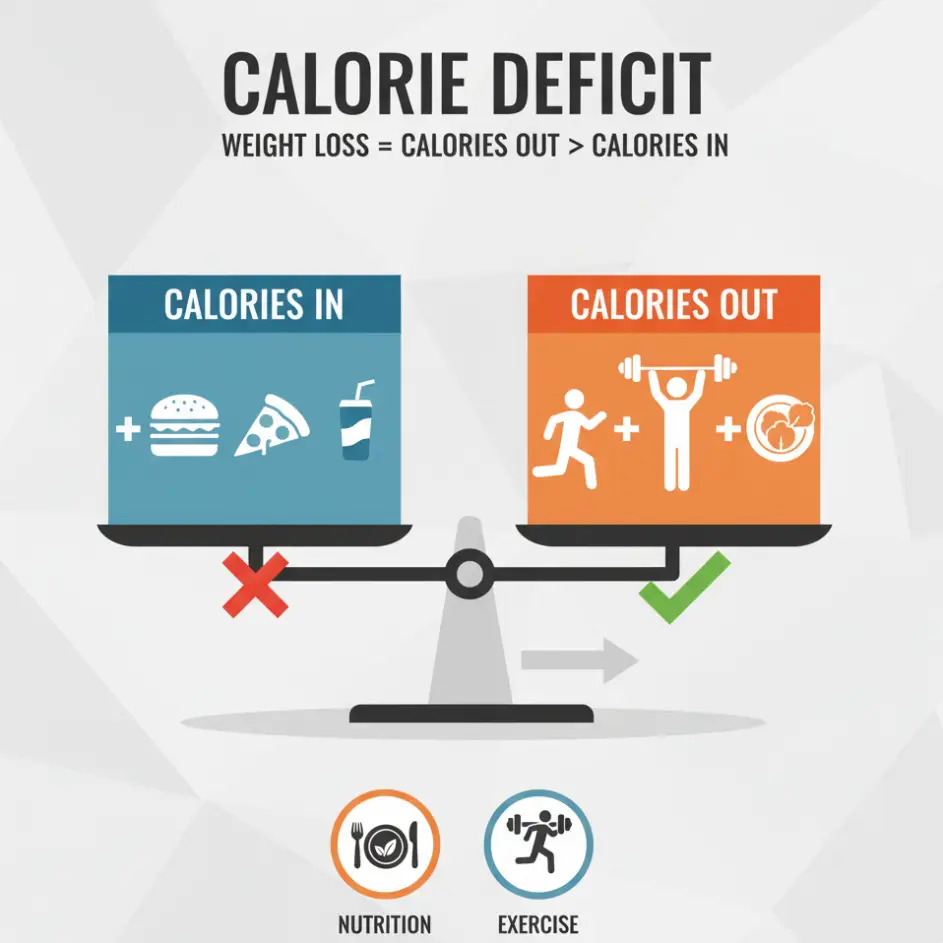
Table of Contents
Understanding a Sustainable Calorie Deficit
What Is a Calorie Deficit and Why Sustainability Matters
A calorie deficit occurs when you consume fewer calories than your body burns. This forces your body to use stored energy, primarily fat, to make up the difference. While that sounds simple, the execution is where most people struggle.
Many fall into the trap of aggressive dieting, believing more restriction equals faster results. Unfortunately, this leads to burnout, muscle loss, and weight regain. A sustainable calorie deficit prioritizes balance. It creates just enough reduction in calories to encourage fat loss while still providing energy for workouts, recovery, and everyday life.
Safe Calorie Deficit vs. Crash Diets
The difference between safe and unsafe calorie deficits lies in numbers. A safe calorie deficit usually means eating 300–500 calories less than maintenance per day. This range encourages steady fat loss while maintaining lean body mass.
Crash diets often cut 800–1,000 calories daily, leaving people hungry, tired, and prone to binging. Research shows aggressive deficits can also disrupt hormones like leptin and ghrelin, making hunger harder to control. Worse, extreme deficits lead to muscle breakdown, slowing metabolism.
The solution is patience: a moderate, sustainable calorie deficit will keep you progressing without burning out.
How to Calculate a Sustainable Calorie Deficit
Daily Calorie Intake for Fat Loss
Your Total Daily Energy Expenditure (TDEE) represents the calories you burn through basic functions (BMR), activity, and exercise. To lose fat, you need to eat below this number.
Here’s a simple method:
- Calculate BMR: (10 × weight in kg) + (6.25 × height in cm) – (5 × age) + 5 (men) / –161 (women).
- Multiply by activity level (1.2 sedentary, 1.55 moderate, 1.725 active).
- Subtract 300–500 kcal for a safe deficit.
Example: A 70kg woman, 165cm, 30 years old, moderately active:
BMR = 1,450 kcal × 1.55 = 2,248 kcal TDEE.
Deficit: 1,750–1,950 kcal for fat loss.
Using a Calorie Deficit Calculator Effectively
Many people turn to tools like a calorie deficit calculator or the NHS calorie calculator for guidance. These calculators provide an estimate of your maintenance calories and suggested deficit.
While useful, calculators aren’t perfect. Factors like muscle mass, stress, and metabolism can affect calorie needs. Think of calculators as starting points, not absolutes. Monitor your progress weekly and adjust calories if weight loss stalls for 2–3 weeks.
How Many Calories to Lose Weight Safely
The 3,500-Calorie Rule Explained (and Its Limitations)
Traditionally, it’s said that 3,500 calories equal one pound of fat. In theory, cutting 500 calories daily should result in losing one pound per week. However, research shows fat loss is not linear.
Factors like metabolism adaptation, water retention, and hormone changes influence weight loss. The 3,500 rule oversimplifies a complex process. Instead, focus on long-term averages: consistency over weeks and months matters more than day-to-day fluctuations.
Realistic Weekly Fat Loss Targets
A safe target is 0.5–1% of your body weight per week. For someone weighing 80kg, that’s 0.4–0.8kg weekly. This rate is realistic, minimizes muscle loss, and encourages adherence.
Trying to lose 2–3kg a week may look tempting, but extreme deficits raise the risk of regaining weight later. Sustainable fat loss means small, consistent progress that builds into lasting results.
What to Eat in a Calorie Deficit

Macronutrients That Support Fat Loss
- Protein: Aim for 1.6–2.2g/kg body weight daily to preserve lean muscle. Protein also has the highest satiety effect, keeping hunger under control.
- Carbohydrates: Focus on whole grains, vegetables, and fruits. These provide fiber, vitamins, and stable energy.
- Fats: Don’t fear healthy fats. Omega-3s, olive oil, nuts, and avocado support hormone function and satiety.
Balancing macros helps make your calorie deficit sustainable. Skipping carbs or fat entirely usually backfires.
Sample Calorie Deficit Meal Plan
Here’s a 1,900-calorie example for a moderately active individual:
html| Meal | Example |
|---|---|
| Breakfast | Oatmeal with blueberries and 2 boiled eggs |
| Lunch | Grilled chicken breast with quinoa and salad |
| Snack | Greek yogurt with almonds |
| Dinner | Baked salmon with sweet potato and broccoli |
This plan is flexible, nutritious, and built for adherence.
Sustainable Calorie Deficit and Exercise
Role of Strength Training in Fat Loss
Strength training is crucial in a calorie deficit. It preserves muscle, which keeps metabolism higher. Without lifting weights, a deficit often leads to both fat and muscle loss.
Read more: Role of Strength Training in Fat Loss
Combining Cardio and Strength Training
A mix of both provides the best results. Strength training preserves muscle, while cardio increases calorie burn and cardiovascular health.
Read more: Combining Cardio and Strength Training
A balanced week could look like this:
- 3 strength sessions (full-body or split)
- 2–3 cardio sessions (cycling, jogging, or HIIT)
Common Mistakes with Calorie Deficit Dieting
Why You’re Not Losing Weight Despite a Deficit
Some people swear they’re in a deficit yet see no results. Common reasons include:
- Miscalculating portions: Hidden oils, sauces, or liquid calories add up.
- Underestimating snacks: “Small bites” still count.
- Hormonal influences: Thyroid, insulin, and cortisol all play roles.
Read more: Hormones and Weight Loss
Also: Why You’re Not Losing Weight
Spot Reduction Myth and Misconceptions
You cannot pick where fat comes off. Sit-ups won’t target belly fat, and tricep kickbacks won’t “burn” arm fat. A deficit impacts overall body composition.
Read more: Spot Reduction Myth
Psychological and Lifestyle Aspects
Mindset and Habit Building for Sustainable Fat Loss
Dieting isn’t just about numbers. Sustainable fat loss requires mindset and habits. Simple changes like meal prepping, reducing food environment temptations, and prioritizing sleep create momentum.
Read more: Mindset and Habit Building
Before and After Transformations: The Real Story
Real progress takes months, sometimes years. Many transformation stories skip over the struggles, plateaus, and lifestyle changes needed. Instead of comparing yourself to Instagram filters, focus on your personal progress.
Read more: Before and After Transformations
Long-Term Fat Loss and Lifestyle Integration
Healthy Six-Pack Goals vs. Everyday Wellness
Chasing abs often distracts from the bigger picture. Energy, strength, and long-term health matter more than aesthetics.
Read more: Healthy Six-Pack Goals
Sustainable Fat Loss as a Lifestyle Shift
The end goal isn’t staying in a deficit forever. Once you reach your target weight, transitioning to maintenance is essential. A sustainable calorie deficit is a tool, but lifestyle habits keep fat off permanently.
Read more: Long-Term Fat Loss Lifestyle
Conclusion: Actionable Takeaways
A sustainable calorie deficit is about moderation, not extremes. By creating a safe calorie deficit of 300–500 calories per day, prioritizing protein, and balancing exercise, you can achieve steady fat loss. The focus isn’t rapid transformation but long-term fat loss that fits into your lifestyle. Build habits, stay patient, and remember: the best deficit is the one you can stick to consistently.
FAQs
Calorie deficit calculator — how does it work?
It estimates your calorie needs for weight loss using your age, sex, weight, height, and activity level. Adjust as needed based on results.
What to eat in calorie deficit?
Stick to nutrient-dense foods: lean proteins, whole grains, vegetables, fruits, and healthy fats. They keep you fuller for fewer calories.
How to calculate calorie deficit?
Find your TDEE and subtract 300–500 calories. Adjust weekly based on progress.
Calorie deficit meal plan — what’s an example?
Breakfast: oats + eggs. Lunch: chicken salad. Dinner: salmon with quinoa. Snacks: Greek yogurt or nuts.
Visit my Instagram account for more