

When it comes to weight loss, people often debate cardio vs weights for weight loss. Cardio burns calories quickly, while lifting weights builds muscle that fuels long-term fat burn. Instead of choosing one, the smartest path is combining cardio with resistance training. This approach not only accelerates fat loss but also improves strength, endurance, and overall health. In this guide, we’ll break down the best ways to combine both, covering training schedules, workout plans, common mistakes, and science-backed strategies.

Table of Contents
Understanding Cardio vs Weights for Weight Loss
Cardio vs Weights for Weight Loss – Which Works Better?
Cardio is effective for burning a high number of calories in a single session. A 30-minute run can burn between 300–500 calories depending on intensity. Strength training, on the other hand, burns fewer calories during the workout itself but creates a stronger afterburn effect (EPOC). More importantly, lifting preserves lean muscle mass, which raises resting metabolic rate.
Scientific reviews show that while cardio may lead to quicker weight loss at first, it often results in muscle loss if not combined with resistance training. Strength training alone may not burn as many calories per session, but it is crucial for shaping the body and maintaining fat loss.
Why the Best Results Come from Combining Both
The real magic happens when you integrate both. Cardio drives immediate calorie burn and heart health. Resistance training ensures fat loss comes from fat rather than muscle. This combination supports a leaner, stronger, and healthier body. Instead of thinking in terms of cardio vs weights, think of it as cardio plus weights for sustainable results.
The Benefits of Combining Cardio and Strength Training
Metabolic Advantages of Mixing Training Styles
Strength training elevates metabolism through muscle building and the EPOC effect. Cardio improves cardiovascular capacity and accelerates calorie burn. When combined, you get a double impact—fast calorie expenditure from cardio and long-term metabolic boost from muscle growth.
Health and Longevity Benefits
Beyond fat loss, combining cardio and weights enhances heart health, blood pressure control, and insulin sensitivity. Strength training builds bone density and joint resilience, reducing injury risks. Together, they provide a balanced foundation for lifelong fitness instead of short-term fixes.
The Best Cardio for Fat Burn Alongside Strength Training
Steady-State vs HIIT – What Works with Weights
Low-intensity steady-state (LISS) cardio—such as walking, cycling, or incline treadmill work—is great for recovery days. High-intensity interval training (HIIT plus weights) is time-efficient and proven to burn fat more effectively than steady cardio when combined with lifting. Studies show HIIT improves fat oxidation while maintaining muscle mass.
Matching Cardio Intensity to Lifting Sessions
On heavy lifting days, lighter cardio helps recovery without taxing the nervous system. On lighter lifting or rest days, HIIT can maximize calorie burn. The key is balance: push intensity in one area while keeping the other moderate.
How to Structure Cardio and Strength Training Together
Cardio and Weight Training on the Same Day for Weight Loss
A common question is whether to do cardio or weights first. Research suggests weights first, cardio second for fat loss. Lifting requires full strength and proper form; doing it first preserves performance. Cardio after weights enhances fat burning since glycogen stores are already depleted.
Weekly Cardio and Strength Training Schedule
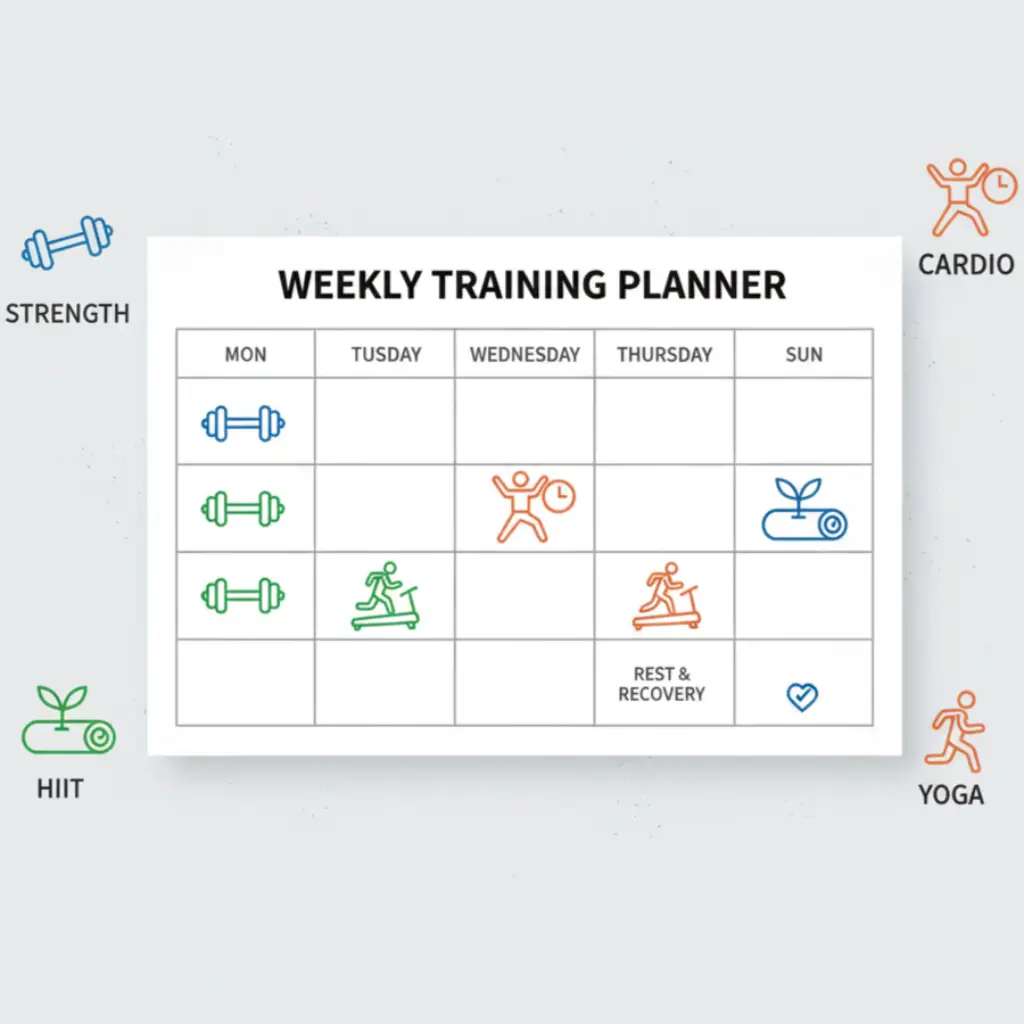
A balanced weekly plan may look like this:
html| Day | Workout |
|---|---|
| Monday | Strength training (full-body) + 20 min steady cardio |
| Tuesday | HIIT cardio (20 min) + mobility work |
| Wednesday | Strength training (upper body) |
| Thursday | Strength training (lower body) + 15 min cardio finisher |
| Friday | HIIT cardio (20–25 min) |
| Saturday | Strength training (full-body circuit) |
| Sunday | Active rest (walking, yoga, stretching) |
Practical Cardio and Strength Training Workout Plans
Combining Cardio and Strength Training at Home
Home-based routines can use bodyweight moves with cardio intervals:
- 10 squats → 30 sec jump rope
- 10 push-ups → 30 sec high knees
- 10 lunges → 30 sec burpees
Repeat 3–5 rounds.
This format preserves strength while keeping heart rate elevated.
Gym-Based Training Split
For gym-goers, pair compound lifts with short cardio bursts. Example:
- Deadlifts → 10 burpees
- Bench press → 30-sec sprint on bike
- Rows → 20 mountain climbers
This “lift + cardio” pairing keeps intensity high without losing focus on strength.
Common Mistakes When Combining Training
Doing Too Much Cardio and Losing Muscle
Too much cardio, especially without enough protein or calories, can lead to muscle breakdown. Aim for 2–3 focused cardio sessions per week alongside strength training.
Ignoring Recovery and Nutrition
Sleep, hydration, and protein intake drive recovery. A sustainable calorie deficit ensures fat loss without extreme restriction. Skipping rest or under-fueling stalls progress and raises risk of burnout.
Science-Backed Tips to Maximize Results
Evidence on Training Order and Timing
Studies suggest doing weights first is superior for strength gains and muscle retention. Cardio-first strategies may fatigue muscles before lifting. Splitting cardio and weights into separate sessions (morning/evening) offers the best of both worlds.
Hormonal and Psychological Benefits
Hormones and weight loss play a major role. Resistance training boosts testosterone and growth hormone, aiding fat loss. Cardio reduces stress and cortisol. Together, they support both physical and mental resilience. Consistency improves further with strong habit building.
Long-Term Lifestyle and Real Results
Why This Combo Supports Long-Term Fat Loss
Unlike quick fixes, a combined plan is adaptable. You can scale intensity, change modalities, and keep workouts engaging. That adaptability makes it sustainable for a long-term fat loss lifestyle.
Success Stories and Transformation Journeys
Before-and-after transformations show real results when cardio and strength are combined. Many individuals reach healthy six-pack goals not by choosing one method but by sticking to a balanced approach.
Conclusion
Cardio alone burns calories fast, but without strength training, you risk losing muscle. Weights alone shape your body, but progress can be slow. Combining cardio and strength training gives the best of both worlds—immediate calorie burn and long-term fat loss. The key is balance: structure your schedule, fuel recovery, and stay consistent. Fitness is not about quick fixes but sustainable routines that support lasting health and confidence.
FAQs
Combining cardio and strength training Reddit
On Reddit, fitness communities often debate the cardio vs weights dilemma. Experienced users and science-backed answers agree: combining both yields superior fat loss and fitness outcomes.
Combining cardio and strength training benefits
Benefits include faster fat loss, lean muscle retention, improved heart health, stronger bones, and sustainable results.
Combining cardio and strength training for weight loss
Lift 3–4 days weekly, add 2–3 cardio sessions (HIIT and steady-state mix), and maintain a calorie deficit.
Combining cardio and strength training at home
Use circuits mixing bodyweight strength moves with cardio intervals (burpees, jump rope, high knees) for effective results without equipment.
Visit my Instagram account for more